Garage Door Won't Open: 10 Common Causes & What to Check First
If your garage door won't open, use the symptom pattern to narrow down springs, opener power, controls, cables, tracks and other common causes before deciding what repair may be needed.
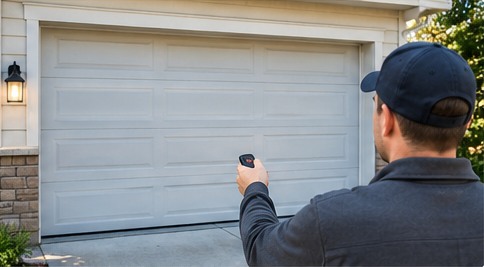
What to check first
Watch what happens when you press the wired wall control. Does the opener make noise? Does the door move a few inches? Is one side crooked? Does nothing happen? The symptom pattern narrows the likely cause.
| Symptom | Possible cause | Next check |
|---|---|---|
| Nothing happens | Power, wall control, lock mode or opener | Confirm power and try the wired control. |
| Motor runs, door does not | Trolley, drive or door hardware | Stop repeated operation and inspect visually. |
| Rises a few inches | Broken spring or excessive weight | Look for a spring gap; do not force it. |
| Crooked or jammed | Cable, roller or track issue | Stop operating the door. |
10 common causes
- Broken spring
- Lost opener power
- Remote battery/transmitter problem
- Wall control lock mode
- Manual door lock
- Disconnected trolley
- Lift cable failure
- Roller/track binding
- Opener drive failure
- Travel or control fault
Could it be a broken spring?
A broken spring is especially likely when the opener strains, the door feels unusually heavy, or a torsion spring has a visible separation. Do not loosen winding cones, set screws, drums or bottom brackets.
Emergency release: use caution
The release disconnects the opener; it does not make a damaged door safe. A door with failed counterbalance can move unexpectedly.
Repair cost factors
Cost depends on the failed component, door size and weight, parts, access, labor and related damage. Diagnosis should come before replacement decisions.
When to stop troubleshooting
FAQs
Why does it open only a few inches?
A failed spring is one important possibility because the opener may be unable to lift unsupported door weight.