Garage Door Making Noise: Grinding, Squeaking, Popping & Other Sounds Explained
A noisy garage door can point to ordinary maintenance, worn rollers, loose hardware, opener problems or a counterbalance issue. Learn what different sounds can mean and when to stop operating the door.
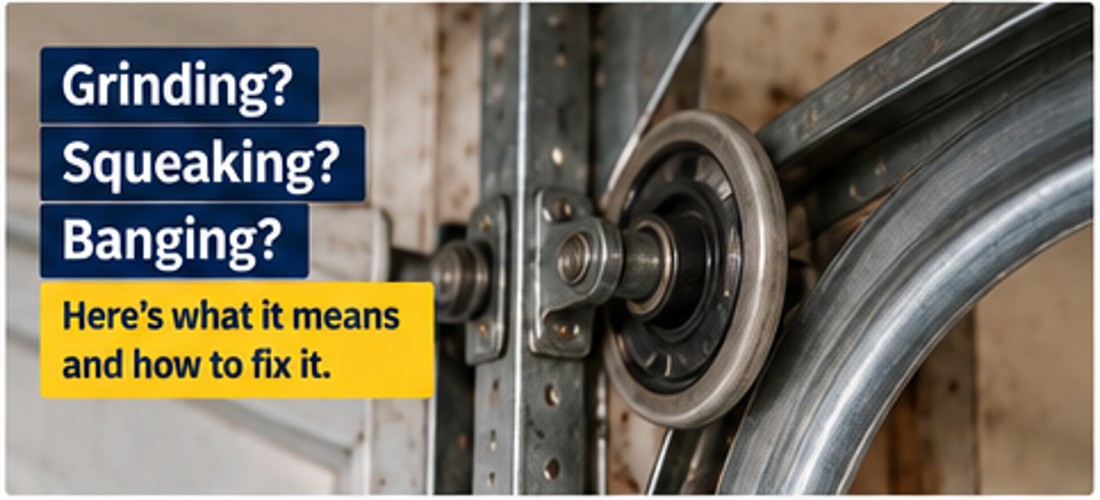
What different garage-door noises can mean
A new sound is useful diagnostic information. Listen for when it happens: at startup, through the full travel, near a curve in the track, or only as the door reaches the floor or header. Noise alone rarely proves which part has failed, but the sound plus location and movement pattern can narrow the possibilities.
| Sound | Possible direction | What to observe |
|---|---|---|
| Squeaking | Dry rollers, hinges or other pivot points | Identify the exact moving joint producing the sound. |
| Grinding | Roller/track, opener drive or binding | Look for rough travel, worn rollers or metal contact. |
| Rattling | Loose hardware or opener rail/drive | Note vibration and visibly loose fasteners. |
| Popping | Spring movement, binding or panel/hardware stress | Stop if movement is jerky or the door becomes heavy. |
| Scraping | Track contact, roller issue or misalignment | Look for rub marks without placing hands near moving parts. |
Rollers, hinges and tracks
Worn rollers can become noisy and rough. Hinges can develop play, and tracks can collect debris or become misaligned. The goal is not simply to silence the noise—it is to determine whether the sound reflects ordinary maintenance or a component that is deteriorating.
Could the noise be the opener?
Chain, belt and screw-drive openers have different normal sound profiles. A sudden change can involve drive components, rail hardware, mounting vibration or motor/gear issues. If the door itself is difficult to move, fix the door problem before blaming the opener.
Spring-related noises
Springs operate under substantial load. A loud bang followed by a heavy door or a visible gap in a torsion spring strongly suggests a spring failure. Do not manipulate spring hardware, winding cones, drums, cables or bottom brackets.
What should be lubricated?
Use a product and procedure appropriate for the door manufacturer's hardware. Lubrication is not a cure for bent track, damaged rollers, loose structural attachments or a failed spring. Avoid treating every sound as a lubrication problem.
When noise becomes a repair-cost issue
A maintenance visit differs from replacement of rollers, hinges, opener components, track or counterbalance parts. Ask for the diagnosed source of the noise and which specific parts are worn before approving work.
When to stop using the door
FAQs
Why is my garage door suddenly much louder?
A sudden change is more important than a door that has always had a particular sound. Inspect for changed movement, loose hardware, worn rollers or an opener issue.
Will lubricant fix a grinding garage door?
Not necessarily. Grinding can indicate mechanical contact or worn components that lubrication will not correct.