Garage Door Off Track: Causes, Warning Signs & Safe Response
A garage door that is crooked, jammed, or has rollers outside the track should not be forced. Learn common causes, safe observations, and what a professional may inspect.
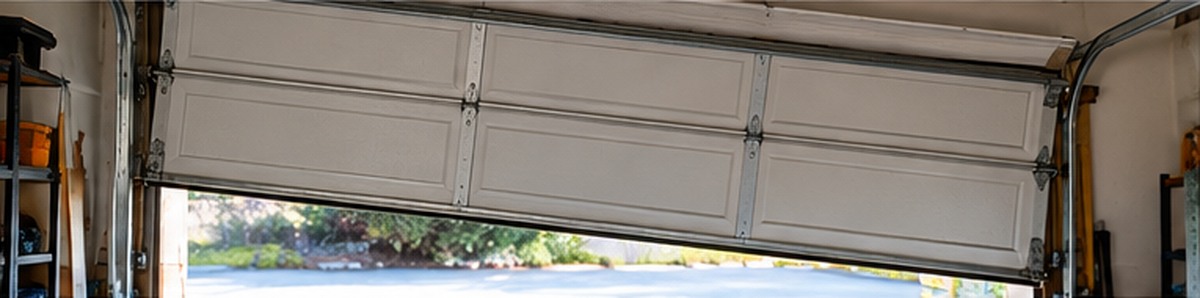
Stop operating a visibly off-track or unsupported door. Forcing the opener can worsen panel, roller, cable, track, or opener damage and can create a falling-door hazard.
What homeowners may notice
Garage door symptoms often overlap, so one clue rarely proves a diagnosis by itself. Look at the door as a complete system and pay attention to what changed immediately before the problem began.
- A roller has visibly left the track
- The door hangs at an angle
- A track is bent after an impact
- The door binds, twists, or makes harsh scraping sounds
Why this problem happens
A sectional garage door depends on the door sections, hinges, rollers, vertical and horizontal tracks, counterbalance springs, lift cables, drums or pulleys, and the automatic opener working together. A fault in one area can create symptoms somewhere else. For example, an opener that appears weak may actually be trying to move a door that has lost spring assistance or is binding mechanically.
Age and repeated cycles matter, but so do impact damage, corrosion, loose hardware, poor alignment, worn rollers, deteriorated seals, changes to door weight, and previous repairs. A useful diagnosis separates the door and counterbalance system from the automatic opener and controls.
Stop operating a visibly off-track or unsupported door. Forcing the opener can worsen panel, roller, cable, track, or opener damage and can create a falling-door hazard.
Safe first checks
- Stop if movement is uncontrolled. Do not continue cycling a door that is crooked, dropping, off track, or visibly damaged.
- Observe without disassembly. From a safe position, look for obvious gaps, frayed cables, displaced rollers, bent track, damaged panels, blocked sensors, or loose visible hardware.
- Check simple controls. When the door itself appears mechanically sound, confirm opener power, wall control behavior, remote batteries, locks, and an unobstructed sensor path.
- Listen to where the symptom occurs. Note whether noise or hesitation appears at the floor, vertical track, curved track, top section, spring area, or opener rail.
- Do not improvise around stored energy. Springs, loaded lift cables, drums, and bottom brackets require appropriate tools and training.
Symptom-to-cause comparison
| Symptom | Possible areas to inspect | Best next step |
|---|---|---|
| Door will not open normally | Power, lock, opener, spring, cable, binding | Check simple controls; stop if spring/cable damage is visible. |
| Door closes then reverses | Sensor path, sensor alignment, travel/reversal system, obstruction | Clear the opening and follow manufacturer safety-sensor guidance. |
| Door is crooked | Cable, drum, roller, track, spring balance | Stop operation and arrange professional inspection. |
| Loud bang or sudden heavy door | Counterbalance spring | Do not operate; inspect visually from a safe distance. |
| Grinding or shaking | Rollers, hinges, track, opener drive, alignment | Observe where noise originates; avoid forcing the door. |
What a professional may evaluate
A garage door professional may inspect door weight and balance, spring type and condition, cable routing and drum condition, roller wear, hinge and bracket condition, track alignment and attachment, panel integrity, opener mounting and drive components, sensor operation, travel limits, and safety reversal behavior. The goal is to identify the failed component without treating every symptom as an opener problem.
Ask for an explanation of what failed, whether related components show wear, what parts are being proposed, applicable warranty terms, and whether the repaired door will be tested for balanced and controlled operation.
Repair versus replacement considerations
Repair is often reasonable when damage is localized and compatible replacement parts are available. Broader replacement may deserve consideration when multiple sections are structurally damaged, corrosion or deterioration is widespread, the door no longer seals or tracks correctly, compatible sections are unavailable, or repeated repairs are accumulating across an aging system.
Do not make the decision from appearance alone. Door weight, spring sizing, opener compatibility, track configuration, reinforcement, insulation, wind requirements where applicable, and installation condition can all affect the appropriate scope.
How to reduce repeat problems
Watch and listen to the door periodically instead of waiting for complete failure. Keep the opening and sensor area clear, follow the door and opener manufacturers’ maintenance instructions, address unusual noise or uneven travel early, and visually inspect springs and cables without touching or adjusting them. Replace deteriorated weather seals when appropriate and keep stored items away from tracks and moving hardware.
Frequently asked questions
What is the first thing to check when garage door off track is suspected?
Start with a visual inspection from a safe position. Do not loosen, adjust, or touch springs, lift cables, cable drums, or bottom brackets. Note whether the door is crooked, unusually heavy, binding, or showing visible damage.
Should I keep using the garage door if it is moving unevenly?
No. Uneven, crooked, jerky, or uncontrolled movement can indicate a mechanical problem. Stop operating the door until the cause is identified.
Can the garage door opener be the only problem?
Sometimes, but the opener should not be diagnosed in isolation. Door balance, springs, cables, rollers, tracks, sensors, controls, and power can create similar symptoms.
When should a garage door professional inspect the system?
Professional inspection is appropriate when the door is unsafe to operate, a spring or cable is damaged, the door is off track or crooked, hardware is structurally damaged, or basic low-risk checks do not explain the problem.