Start with what the garage door is doing
Good troubleshooting begins with symptoms rather than assumptions. Two doors that behave similarly can have very different underlying problems. Before arranging service, note whether the problem affects opening, closing, balance, alignment, noise, remote controls, wall controls or safety reversal.
Garage door won't open
Possible categories include power or opener problems, controls, a broken spring, cable trouble, binding rollers or tracks, a locked door, or another mechanical obstruction. Do not repeatedly run the opener against a door that will not move normally.
Door opens partway
A partially moving door can involve lifting assistance, binding hardware, track alignment, opener settings or another mechanical issue. Stop if movement is strained, crooked or accompanied by unusual sounds.
Door closes and reverses
Photo-eye sensors, obstructions, alignment, travel/force settings or mechanical resistance may be involved. Sensor lenses and the doorway can be visually checked without adjusting high-tension hardware.
Door is crooked or uneven
Uneven movement can indicate cable, roller, track or other hardware trouble. Because cables and springs work with substantial stored energy and door weight, avoid attempting to straighten or tension the system yourself.
Grinding, popping or scraping
Noise can come from worn rollers, hinges, tracks, opener components, loose hardware or other moving parts. A new or rapidly worsening sound deserves attention, especially when paired with irregular movement.
Remote or opener isn't working
Start with basic power, remote battery, wall-control and sensor checks. If the door operates manually only when it is safe to do so, the issue may be isolated to the opener—but a heavy or unbalanced door can also strain an opener.
Common garage door components that may need service
Springs
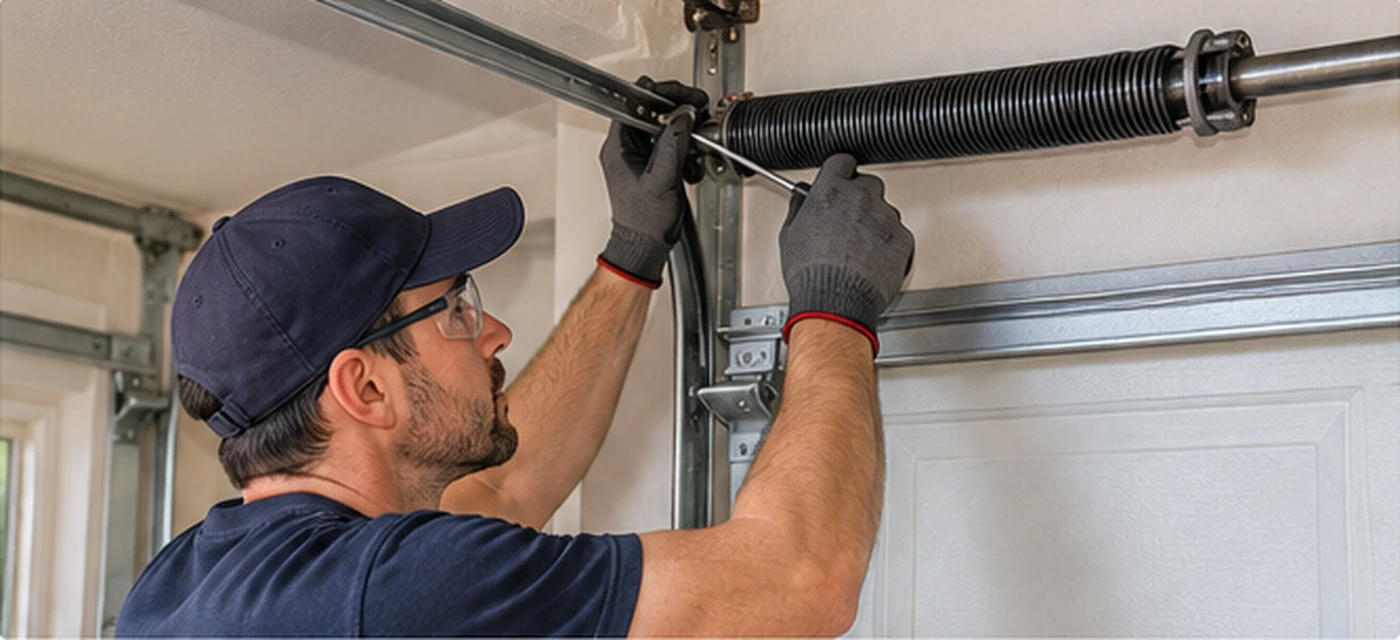
Springs counterbalance much of the door's weight. A failed spring can make a door extremely heavy and can prevent an opener from lifting it normally. Spring systems vary, and replacement involves stored mechanical energy.
Cables and drums
Lift cables work with the spring system to raise and lower the door. Fraying, slack, displacement or breakage can lead to uneven movement and potentially hazardous conditions.
Rollers, hinges and tracks
These components guide and support sectional-door movement. Wear, damage, looseness or misalignment can contribute to noise, binding and irregular travel. Track problems should be evaluated in the context of the complete door system rather than simply forced back into position.
Garage door opener
The opener moves a properly functioning door; it is not intended to compensate for serious balance or hardware problems. Opener issues may involve controls, sensors, drive components, electronics, travel settings or the motor assembly.
Panels and weather seals
Cosmetic damage does not always require complete door replacement, but severe panel damage can affect operation, fit or structural integrity. Availability of matching replacement sections depends on the door model and manufacturer.
What affects garage door repair cost?
There is no single meaningful repair price without knowing what failed and what the service scope includes. Homeowners comparing estimates should focus on the work being proposed as well as the total price.
| Cost factor | Why it matters |
|---|---|
| Failed component | Springs, cables, rollers, panels, sensors and opener components involve different parts and labor. |
| Door size and construction | Single versus double doors, materials, insulation, weight and hardware can change parts and service requirements. |
| Extent of damage | An isolated failed part is different from damage involving multiple connected components. |
| Parts and compatibility | Specific door and opener systems may require compatible replacement parts. |
| Labor and access | Complexity, installation conditions and local labor markets can affect the estimate. |
| Repair versus replacement scope | Repeated failures or broader deterioration may justify comparing repair with partial or full replacement options. |
Repair or replace the garage door?
Repair often makes sense when the problem is isolated, the rest of the door is in sound condition, compatible parts are available and the repair restores safe, reliable operation. Replacement becomes more relevant when damage is widespread, major problems keep recurring, several components are deteriorated, panels are substantially damaged, or the existing door no longer provides the performance or features the homeowner wants.
Age alone should not decide the question. Condition, failure history, safety, parts availability, door performance and the economics of the proposed repair all matter.
What to do before a garage door service visit
Useful preparation can make the evaluation more efficient. Record what the door does, when the problem started and whether it is intermittent. Note unusual noises, visible damage and whether wall controls or remotes behave differently. If accessible without touching moving or tensioned parts, identify the door or opener brand/model information.
Do not repeatedly operate a malfunctioning door just to demonstrate the problem. Photos or a short description may be safer and more useful when movement appears abnormal.
Questions to ask about a repair estimate
| Ask | What you are trying to understand |
|---|---|
| What failed? | The diagnosed cause rather than only the symptom. |
| What parts are being replaced? | The exact repair scope and whether related components are included. |
| Why is this repair recommended? | Whether the proposed work addresses the underlying problem. |
| Are other components damaged or worn? | Whether the failure is isolated or part of broader deterioration. |
| What warranty applies? | Coverage for parts and labor and any important exclusions. |
| Would replacement be worth comparing? | Useful when repair costs are substantial or failures have become repetitive. |
When to stop operating the door
Stop using the door and keep people, pets and vehicles away when the door is hanging unevenly, a cable is loose or broken, a spring appears broken, hardware is coming away from its mounting, the door is at risk of falling, or movement is violent or unpredictable. Do not stand beneath a malfunctioning garage door.
Garage door repair FAQs
Why won't my garage door open?
Possible causes range from power, remote, wall-control or opener issues to springs, cables, tracks, rollers or other mechanical problems. The behavior of the door and a physical evaluation are needed to narrow the cause.
Can I repair a broken garage door spring myself?
Spring and cable systems can contain substantial stored energy. GarageDoorHelp.net recommends leaving high-tension component adjustment and replacement to appropriately trained professionals.
Does a damaged garage door always need replacement?
No. Some problems are isolated and repairable. Replacement is more likely to deserve consideration when damage or deterioration is extensive, failures recur, or repair economics become unfavorable.
Should I replace my garage door opener at the same time?
Not automatically. The opener's condition, compatibility, safety features and performance should be evaluated separately from the door, although a broader replacement project can be a logical time to compare options.